
1
↑1
NAPALM & SILLY PUTTY
George Carlin
NAPALM & SILLY PUTTY
by George Carlin · Hyperion
1 wks at #1 · 2 on list
"The thinking person's comic offers a hilarious new collection of razor-sharp observations ..."--Page 4 of cover.
by George Carlin · Hyperion
"The thinking person's comic offers a hilarious new collection of razor-sharp observations ..."--Page 4 of cover.

by James Bamford · Doubleday
An inside look at the secretive National Security Agency reveals its operations and dirtiest secrets from the Cold War.

by Doug Stanton · Holt
A harrowing, adrenaline-charged account of America's worst naval disaster -- and of the heroism of the men who, against all odds, survived. On July 30, 1945, the USS Indianapolis was torpedoed in the South Pacific by a Japanese submarine. An estimated 300 men were killed upon impact; close to 900 sailors were cast into the Pacific Ocean, where they remained undetected by the navy for nearly four days and nights. Battered by a savage sea, they struggled to stay alive, fighting off sharks, hypothermia, and dementia. By the time rescue arrived, all but 317 men had died. The captain's subsequent court-martial left many questions unanswered: How did the navy fail to realize the Indianapolis was missing? Why was the cruiser traveling unescorted in enemy waters? And perhaps most amazing of all, how did these 317 men manage to survive? Interweaving the stories of three survivors -- the captain, the ship's doctor, and a young marine -- journalist Doug Stanton has brought this astonishing human drama to life in a narrative that is at once immediate and timeless. The definitive account of a little-known chapter in World War II history, In Harm's Way is destined to become a classic tale of war, survival, and extraordinary courage.

by Joseph J. Ellis · Knopf
An illuminating study of the intertwined lives of the founders of the American republic--John Adams, Aaron Burr, Benjamin Franklin, Alexander Hamilton, Thomas Jefferson, James Madison, and George Washington. During the 1790s, which Ellis calls the most decisive decade in our nation's history, the greatest statesmen of their generation--and perhaps any--came together to define the new republic and direct its course for the coming centuries. Ellis focuses on six discrete moments that exemplify the most crucial issues facing the fragile new nation: Burr and Hamilton's deadly duel, and what may have really happened; Hamilton, Jefferson, and Madison's secret dinner, during which the seat of the permanent capital was determined in exchange for passage of Hamilton's financial plan; Franklin's petition to end the "peculiar institution" of slavery--his last public act--and Madison's efforts to quash it; Washington's precedent-setting Farewell Address, announcing his retirement from public office and offering his country some final advice; Adams's difficult term as Washington's successor and his alleged scheme to pass the presidency on to his son; and finally, Adams and Jefferson's renewed correspondence at the end of their lives, in which they compared their different views of the Revolution and its legacy. In a lively and engaging narrative, Ellis recounts the sometimes collaborative, sometimes archly antagonistic interactions between these men, and shows us the private characters behind the public personas: Adams, the ever-combative iconoclast, whose closest political collaborator was his wife, Abigail; Burr, crafty, smooth, and one of the most despised public figures of his time; Hamilton, whose audacious manner and deep economic savvy masked his humble origins; Jefferson, renowned for his eloquence, but so reclusive and taciturn that he rarely spoke more than a few sentences in public; Madison, small, sickly, and paralyzingly shy, yet one of the most effective debaters of his generation; and the stiffly formal Washington, the ultimate realist, larger-than-life, and America's only truly indispensable figure. Ellis argues that the checks and balances that permitted the infant American republic to endure were not primarily legal, constitutional, or institutional, but intensely personal, rooted in the dynamic interaction of leaders with quite different visions and values. Revisiting the old-fashioned idea that character matters, Founding Brothers informs our understanding of American politics--then and now--and gives us a new perspective on the unpredictable forces that shape history.

by Ruth Reichl · Random House
In this delightful sequel to her bestseller Tender at the Bone, the beloved food writer Ruth Reichl returns with more tales full of love, life, humour and marvellous meals. Ruth Reichl's pursuit of good food and good company leads her to New York and China, France and Los Angeles. She cooks and dines with world-famous chefs and the three star aristocracy of French cuisine, and her accounts of these meetings range from the madcap to the sublime. Reichl lovingly recreates all her marvellous meals in such succulent detail that readers will yearn from truffles in Provence and shrimp in Beijing. Throughout it all, Reichl is unafraid, even eager, to poke holes in the pretensions of food critics, making each and every course a hilarious and instructive occasion for novices and experts alike. She shares some of her first recipes so readers can make the Dry-Fried Shrimp she first tasted in China, or the Dacquoise served at the end of a magical visit to a Paris bistro. Reichl also shares the intimacies of her personal life in a style so honest and warm that readers will feel they are enjoying a cosy dining-table conversation with a friend. In Comfort Me With Apples, Reichl again demonstrates her inimitable ability to combine food writing, humour and memoir into an art form.
by Jay Winik · HarperCollins
Examines the final days of the Civil War from the fall of Richmond to the official end of the war at Appomattox and the assassination of President Abraham Lincoln.

by Marie Osmond with Marcia Wilkie and Judith Moore · Warner
The television and singing star recalls her personal struggle with depression following the birth of her seventh child and offers advice and support to other mothers struggling with postpartum depression.

by Tom Brokaw · Random House
A seventeen-year-old who enlisted in the army in 1941 writes to describe the Bataan Death March. Other members of the greatest generation describe their war — in such historic episodes as Guadalcanal, the D-Day invasion, the Battle of the Bulge, and Midway — as well as their life on the home front. In this beautiful American family album of stories, reflections, memorabilia, and photographs, history comes alive and is preserved, in people’s own words and through photographs and time lines that commemorate important dates and events. Starting with the Depression and Pearl Harbor, on through the war in Europe and the Pacific, this unusual book preserves a people’s rich historical heritage and the legacy of the heroism of a nation.

by Eric Schlosser · Houghton Mifflin
An exploration of the fast food industry in the United States, from its roots to its long-term consequences.
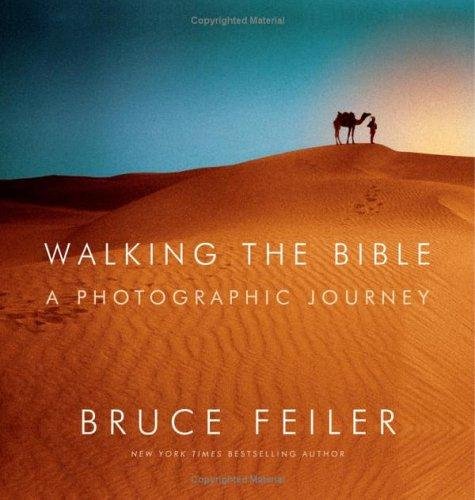
by Bruce Feiler · Morrow
"The process of gathering these images reminded me of the Bible's effortless ability to reinvent itself for each generation and each new way of searching." —Bruce Feiler Its stories may be the best known in the world, but its locations have long been a mystery. Where did Noah's ark land? Where did Moses receive the Ten Commandments? Where are the lost cities of Sodom and Gomorrah? Now, in Walking the Bible: A Photographic Journey, New York Times bestselling author Bruce Feiler offers an unprecedented heart-stirring adventure through the landscape of some of history's most storied events. Featuring Bruce Feiler's own photography as well as his selections from professional collections, Walking the Bible: A Photographic Journey brings together breathtaking vistas, intimate portraits, and fascinating panoramas, providing firsthand access to the inscrutable land where three of the world's great religions were born—and finally puts a face on the stories that have long inspired the human spirit. Over several years, Feiler traveled nearly ten thousand miles through the deserts of the Middle East, which led first to his runaway national bestseller Walking the Bible. This new illustrated book follows his route, offering a thrilling photographic voyage through the actual places of some of the Bible's most memorable events—from the heights of Mount Ararat, where Noah's ark landed, to the desert outpost in Turkey, where Abraham first heard the words of God, to the summit where Moses overlooked the Promised Land. Walking the Bible: A Photographic Journey chronicles a landscape that nurtured the relationship between humans and the divine, breathing new meaning into stories that have been a timeless source of inspiration.

by David Limbaugh · Regnery
Examines the actions and policies of the Justice Department under the leadership of Janet Reno and Bill Clinton, and discusses the long-term political and legal implications of the Clinton administration.
Historical bestseller data sourced from the New York Times Book Review, archived by Hawes Publications.