LEADERSHIP
by Rudolph W. Giuliani with Ken Kurson · Miramax/Hyperion
The former mayor of New York City describes the management, decision-making, and leadership skills that made him a success as a prosecutor and as mayor of New York City.
by Rudolph W. Giuliani with Ken Kurson · Miramax/Hyperion
The former mayor of New York City describes the management, decision-making, and leadership skills that made him a success as a prosecutor and as mayor of New York City.

by Lisa Beamer with Ken Abraham · Tyndale
Shares details of the author's marriage and recounts her struggle to cope with the tragedy that cost her the life of her husband.

by Thomas L. Friedman · Farrar, Straus & Giroux
America's leading observer of the international scene on the minute-by-minute events of September 11, 2001--before, during and after . As the Foreign Affairs columnist for the The New York Times, Thomas L. Friedman is in a unique position to interpret the world for American readers. Twice a week, Friedman's celebrated commentary provides the most trenchant, pithy,and illuminating perspective in journalism. Longitudes and Attitudes contains the columns Friedman has published about the most momentous news story of our time, as well as a diary of his experiences and reactions during this period of crisis. As the author writes, the book is "not meant to be a comprehensive study of September 11 and all the factors that went into it. Rather, my hope is that it will constitute a 'word album' that captures and preserves the raw, unpolished, emotional and analytical responses that illustrate how I, and others, felt as we tried to grapple with September and its aftermath, as they were unfolding." Readers have repeatedly said that Friedman has expressed the essence of their own feelings, helping them not only by explaining who "they" are, but also by reassuring us about who "we" are. More than any other journalist writing, Friedman gives voice to America's awakening sense of its role in a changed world.

by Bruce Feiler · Morrow
In his new book, Bruce Feiler, the acclaimed author of Walking the Bible, travels to the Middle East to find the truth and the meaning behind the shadowy biblical figure of Abraham. He also explores how the three religions of Judaism, Christianity and Islam have appropriated Abraham as part of their tradition - and how the old man of the Bible could once again become a unifying force for those bitterly divided faiths. - Who was Abraham? - Why is he of fundamental importance to Jews, Christians and Muslims? - Can the message of his story help reconcile the warring faiths?
by Tom Shales and James Andrew Miller · Little, Brown
WHEN A YOUNG WRITER named Lorne Michaels talked NBC executives into taking a chance on a new weekend late-night comedy series, nobody really knew what to expect-not even Michaels. But Saturday Night Live, launched in 1975 and still thriving today, would change the face of television. It introduced brash new stars with names like Belushi, Radner, Chase, and Murray; trashed taboos that had inhibited TV for decades; and had such an impact on American life, laughter, and politics that even presidents of the United States had to take notice. Now, Pulitzer Prize-winner Tom Shales and bestselling author James Andrew Miller bring together stars, writers, guest hosts, contributors, and craftsmen for the first-ever oral history of Saturday Night Live, from 1974, when it was just an idea, through 2002, when it has long since become an institution. In their own words, dozens of personalities recall the backstage stories, behind-the-scenes gossip, feuds, foibles, drugs, sex, struggles, and calamities, including personal details never before revealed. Shales and Miller have interviewed a galaxy of stars, including Mike Myers, Chris Rock, Bill Murray, Tom Hanks, Adam Sandler, Chevy Chase, Will Ferrell, Dan Aykroyd, Steve Martin, Jon Lovitz, Jane Curtin, Billy Crystal, Martin Short, Dana Carvey, Tina Fey, Jimmy Fallon, Chris Kattan, Julia Louis-Dreyfus, Garrett Morris, Molly Shannon, Damon Wayans, Chris Elliott, Julia Sweeney, Norm Macdonald, and Paul Simon-plus writers like Al Franken, Conan O'Brien, Larry David, Rosie Shuster, Jack Handey, Robert Smigel, Don Novello, and others who got their big breaks as part of the SNL team. The Coneheads, the Blues Brothers, Buck-wheat, Wayne and Garth, Hans and Franz, the Cheerleaders, Todd DiLaMuca and Lisa Loopner, "Cheeseburger cheeseburger," Mango, the Church Lady, Ed Grimley-they're all here. And for every fabulous character on-screen there was an outrageous maverick, misfit, or rebel behind the scenes. Live from New York does what no other book about the show has ever done: It lets the people who were there tell the story in their own words, blunt and loving and uncensored.

by Arthur Levitt with Paula Dwyer · Pantheon
The ultimate insider reveals the culture of collusion and how it affects the individual investor. With integrity and authority, Levitt gives essential advice on how not to lose money.

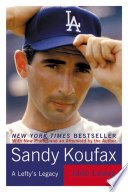
by Jane Leavy · HarperCollins
“Leavy has hit it out of the park…A lot more than a biography. It’s a consideration of how we create our heroes, and how this hero’s self perception distinguishes him from nearly every other great athlete in living memory… a remarkably rich portrait.” — Time The New York Times bestseller about the baseball legend and famously reclusive Dodgers’ pitcher Sandy Koufax, from award-winning former Washington Post sportswriter Jane Leavy. Sandy Koufax reveals, for the first time, what drove the three-time Cy Young award winner to the pinnacle of baseball and then—just as quickly—into self-imposed exile.

by Richard Preston · Random House
“The bard of biological weapons captures the drama of the front lines.”—Richard Danzig, former secretary of the navy The first major bioterror event in the United States-the anthrax attacks in October 2001-was a clarion call for scientists who work with “hot” agents to find ways of protecting civilian populations against biological weapons. In The Demon in the Freezer, his first nonfiction book since The Hot Zone, a #1 New York Times bestseller, Richard Preston takes us into the heart of Usamriid, the United States Army Medical Research Institute of Infectious Diseases at Fort Detrick, Maryland, once the headquarters of the U.S. biological weapons program and now the epicenter of national biodefense. Peter Jahrling, the top scientist at Usamriid, a wry virologist who cut his teeth on Ebola, one of the world’s most lethal emerging viruses, has ORCON security clearance that gives him access to top secret information on bioweapons. His most urgent priority is to develop a drug that will take on smallpox-and win. Eradicated from the planet in 1979 in one of the great triumphs of modern science, the smallpox virus now resides, officially, in only two high-security freezers-at the Centers for Disease Control in Atlanta and in Siberia, at a Russian virology institute called Vector. But the demon in the freezer has been set loose. It is almost certain that illegal stocks are in the possession of hostile states, including Iraq and North Korea. Jahrling is haunted by the thought that biologists in secret labs are using genetic engineering to create a new superpox virus, a smallpox resistant to all vaccines. Usamriid went into a state of Delta Alert on September 11 and activated its emergency response teams when the first anthrax letters were opened in New York and Washington, D.C. Preston reports, in unprecedented detail, on the government’ s response to the attacks and takes us into the ongoing FBI investigation. His story is based on interviews with top-level FBI agents and with Dr. Steven Hatfill. Jahrling is leading a team of scientists doing controversial experiments with live smallpox virus at CDC. Preston takes us into the lab where Jahrling is reawakening smallpox and explains, with cool and devastating precision, what may be at stake if his last bold experiment fails.

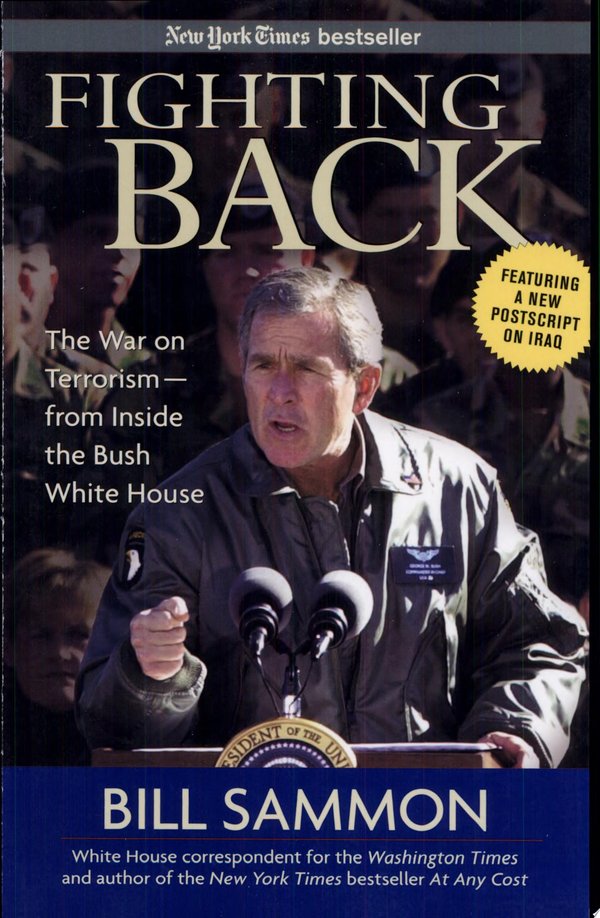
by Bill Sammon · Regnery
In this bestselling book the author goes behind the scenes with President George W. Bush and his teams as they lead the nation on a new kind of war.

by Tony Horwitz · Holt
In a vivid, often hilarious narrative, the Pullitzer Prize-winning author of Confederates in the Attic retraces the great voyages of Captain James Cook, the British farmboy who drew the map of the modern world.

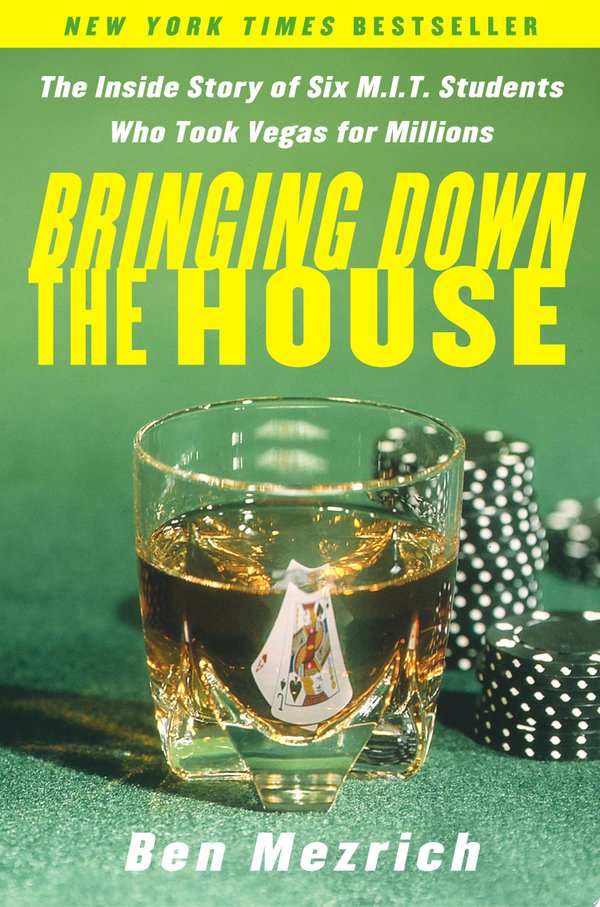
by Ben Mezrich · Free Press
Recounts the story of how a notorious gang of MIT blackjack savants devised and received backing for a system for winning at the world's most sophisticated casinos, an endeavor that earned them more than three million dollars.

by Mel Levine · Simon & Schuster
"Different minds learn differently," writes Dr. Mel Levine, one of the best-known education experts and pediatricians in America today. And that's a problem for many children, because most schools still cling to a one-size-fits-all education philosophy. As a result, these children struggle because their learning patterns don't fit the schools they are in. In A Mind at a Time, Dr. Levine shows parents and others who care for children how to identify these individual learning patterns. He explains how parents and teachers can encourage a child's strengths and bypass the child's weaknesses. This type of teaching produces satisfaction and achievement instead of frustration and failure. Different brains are differently wired, Dr. Levine explains. There are eight fundamental systems, or components, of learning that draw on a variety of neurodevelopmental capacities. Some students are strong in certain areas and some are strong in others, but no one is equally capable in all eight. Using examples drawn from his own extensive experience, Dr. Levine shows how parents and children can identify their strengths and weaknesses to determine their individual learning styles. For example, some students are creative and write imaginatively but do poorly in history because weak memory skills prevent them from retaining facts. Some students are weak in sequential ordering and can't follow directions. They may test poorly and often don't do well in mathematics. In these cases, Dr. Levine observes, the problem is not a lack of intelligence but a learning style that doesn't fit the assignment. Drawing on his pioneering research and his work with thousands of students, Dr. Levine shows how parents and teachers can develop effective strategies to work through or around these weaknesses. "It's taken for granted in adult society that we cannot all be 'generalists' skilled in every area of learning and mastery. Nevertheless, we apply tremendous pressure to our children to be good at everything. They are expected to shine in math, reading, writing, speaking, spelling, memorization, comprehension, problem solving...and none of us adults can" do all this, observes Dr. Levine. Learning begins in school but it doesn't end there. Frustrating a child's desire to learn will have lifelong repercussions. This frustration can be avoided if we understand that not every child can do equally well in every type of learning. We must begin to pay more attention to individual learning styles, to individual minds, urges Dr. Levine, so that we can maximize children's learning potential. In A Mind at a Time he shows us how.

by Christopher Reeve · Random House
NEW YORK TIMES BESTSELLER • The legendary star of Superman and author of Still Me reflects on the power of hope and the limitless potential in each of us. “Graceful, persuasive . . . A reflective mixture of policy advocacy, personal philosophy, and candid self-observation.”—The Philadelphia Inquirer Christopher Reeve has mastered the art of turning the impossible into the inevitable. In these candid reflections, Reeve shows that we are all capable of overcoming seemingly insurmountable hardships. He teaches us that for able-bodied people, paralysis is a choice—a choice to live with self-doubt and a fear of taking risks—and that it is not an acceptable one. Reeve knows from experience that the work of conquering inner space is hard and that it requires some suffering—after all, nothing worth having is easy to attain. He asks challenging questions about why it seems so difficult—if not impossible—for us to work together as a society. Thoughtful and inspiring, Nothing Is Impossible reminds us that life is not to be taken for granted but to be lived fully with zeal, curiosity, and gratitude.

by Steven Pinker · Viking Press
Banishes the fears that a biological understanding of human nature threatens humane values.
Historical bestseller data sourced from the New York Times Book Review, archived by Hawes Publications.